The world of branding and advertising is undergoing rapid transformation as we approach 2026. With technology evolving at lightning speed and consumer expectations shifting, the path to success for any branding and advertising company looks very different than it did just a few years ago.
This article reveals 9 essential, future-focused tips designed to help your branding and advertising company stand out in an increasingly competitive marketplace. You will explore topics like leveraging AI, building authentic brands, creating seamless omnichannel strategies, harnessing data-driven personalization, advancing sustainability, and more.
Ready to future-proof your company? Dive in for practical insights that drive growth, relevance, and long-term success.
The Evolving Landscape of Branding and Advertising in 2026
The branding and advertising company scene in 2026 is experiencing a profound transformation. Consumer expectations are shifting quickly, driven by rapid advances in technology and a growing demand for meaningful, authentic engagement. To succeed, brands must remain agile and attentive to the forces shaping the market.
Consumer Behavior and Brand Expectations
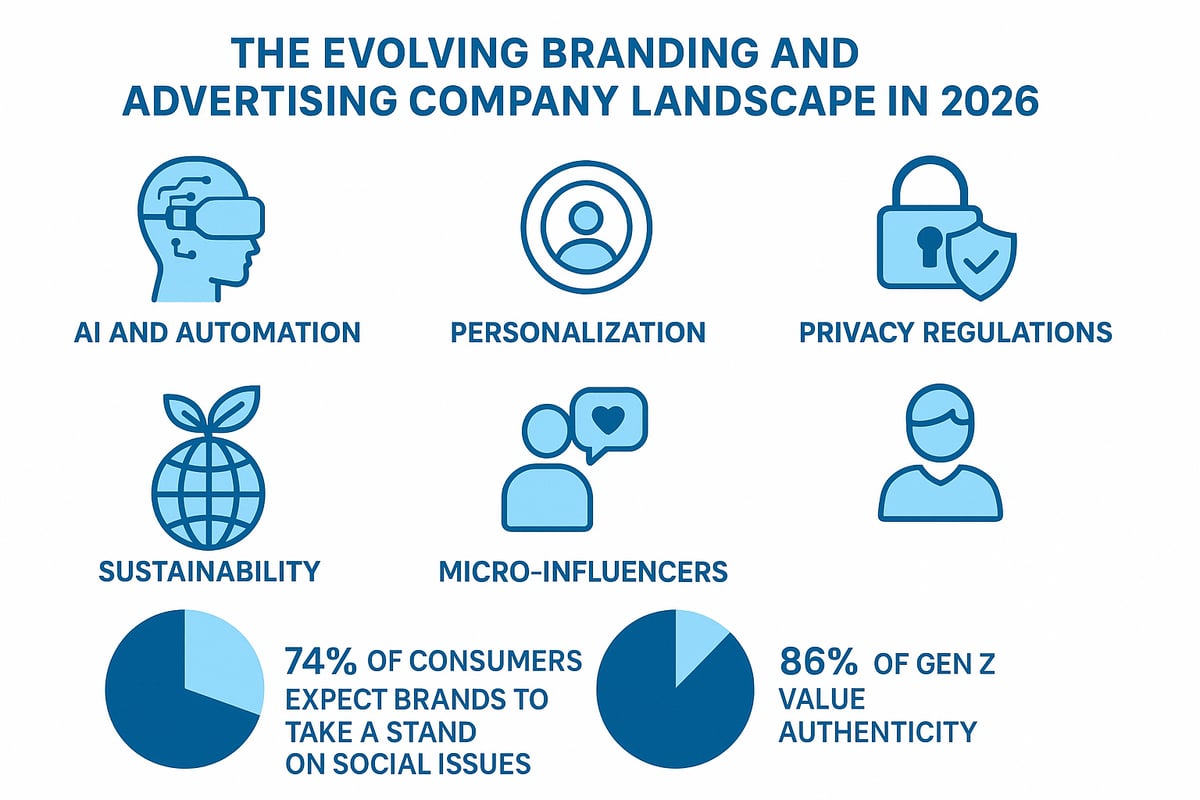
Today’s consumers want more than just products—they seek authentic connections with the brands they choose. Personalization and transparency are no longer optional for any branding and advertising company. According to the Edelman Trust Barometer (2024), 74% of consumers expect brands to take a clear stand on social issues.
This shift is especially prominent among Gen Z and younger millennials, who value honest storytelling and real brand actions over polished marketing. Brands that openly share their values, supply chain details, and business practices are building deeper trust and loyalty.
| Statistic | Source |
|---|---|
| 74% expect brands to take a stand on issues | Edelman Trust Barometer 2024 |
| 86% of Gen Z value authenticity | Sprout Social 2025 |
Technology’s Role in Transformation
Emerging technologies are rewriting the rules for every branding and advertising company. Artificial intelligence, AR/VR, and advanced automation tools are empowering brands to create highly personalized, interactive campaigns at scale. AI-driven content creation, predictive analytics, and automated ad optimization are just a few areas where innovation is accelerating.
To stay ahead, companies are closely following 2026 Marketing Trends, leveraging the latest advancements to craft more engaging and effective strategies. However, this rapid evolution is also bringing new challenges, particularly around data privacy and regulatory compliance.
The introduction of stricter privacy regulations means brands must rethink how they collect and use consumer data. Responsible data practices and transparency are now essential for maintaining trust and compliance.
Social Responsibility and Sustainability
Sustainability and social responsibility have become central to the branding and advertising company ethos. Modern consumers are holding brands accountable for their impact on society and the environment. Companies that integrate eco-friendly practices, inclusive messaging, and ethical operations into their brand identity are seeing measurable business benefits.
Examples include brands switching to recyclable packaging, supporting local communities, and featuring diverse voices in their campaigns. These actions are not just good for the planet—they directly influence purchasing decisions.
Agility, Micro-Influencers, and Future Readiness
The landscape is also witnessing the rise of micro-influencers and community-driven marketing. Unlike traditional celebrity endorsements, micro-influencers foster genuine relationships within niche communities, resulting in higher engagement and authenticity for any branding and advertising company.
Adaptability is key. Brands that invest in ongoing learning, upskill their teams, and embrace agile processes are better equipped to respond to sudden market shifts and emerging trends. The companies that thrive in 2026 will be those that continuously evaluate, innovate, and refine their approach in this fast-moving environment.
9 Essential Branding and Advertising Company Tips for 2026
To succeed in 2026, every branding and advertising company must adapt quickly, embrace innovation, and prioritize people. The future favors those who blend creativity with technology, authenticity with analytics, and agility with purpose. Here are nine essential strategies your team should act on to lead the industry.
1. [Embrace AI-Driven Creativity and Automation]
AI is transforming the branding and advertising company landscape. Modern AI tools now ideate campaigns, generate content, and optimize ads with speed and accuracy. For example, AI-powered copywriting engines and image generators are enabling agencies to produce more variations and personalized assets in less time.
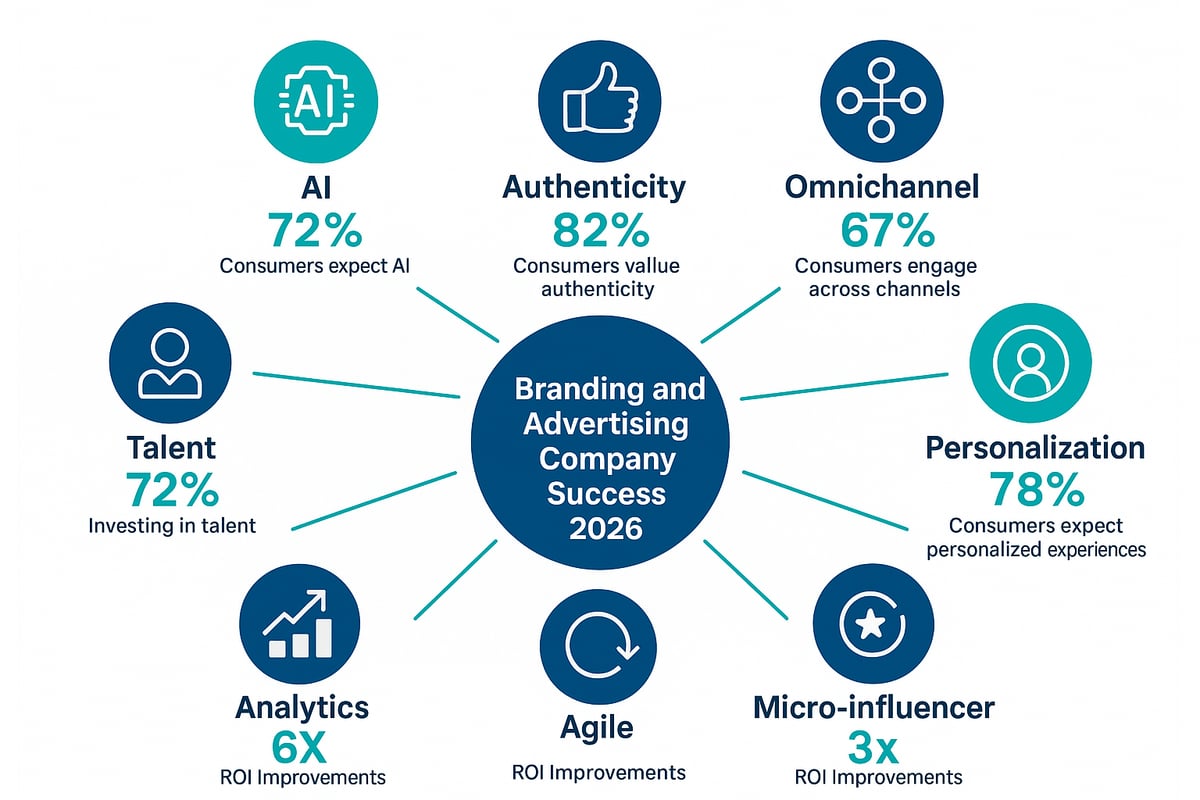
Predictive analytics helps a branding and advertising company anticipate trends and consumer behavior, making campaigns more relevant. The benefits are clear: 61% of marketers reported increased ROI from AI-driven campaigns (Salesforce, 2025). However, challenges remain, such as maintaining a consistent brand voice and ensuring ethical use.
To integrate AI effectively, start by auditing your workflows. Identify repetitive creative tasks that could be automated. Train your team to use AI tools, but keep human oversight for quality and brand alignment. For further perspective, review AI’s Impact on Advertising to understand responsible AI implementation in advertising.
A forward-thinking branding and advertising company will balance AI automation with human creativity to deliver campaigns that are both innovative and authentic.
2. [Prioritize Brand Authenticity and Transparency]
In 2026, authenticity is the currency of trust. A branding and advertising company must focus on honest storytelling, using real voices and transparent practices. Consumers are increasingly skeptical, demanding genuine engagement and visibility into how brands operate.
Brands excelling in transparency often disclose their supply chain, offer open pricing, or share impact reports. According to Sprout Social (2025), 86% of Gen Z values authenticity over polished branding. This shift requires brands to audit their messaging and ensure it reflects real actions, not just words.
A branding and advertising company can improve authenticity by soliciting customer feedback, showcasing behind-the-scenes content, and publishing clear values. For strategies to enhance both content and brand development, explore Content Creation and Branding.
Ultimately, authenticity builds long-term loyalty, making it a non-negotiable standard for any forward-looking branding and advertising company.
3. [Leverage Omnichannel Experiences for Seamless Engagement]
Today’s customers expect to interact with a branding and advertising company seamlessly across digital, physical, and emerging channels. Omnichannel strategies unify these touchpoints, ensuring consistent messaging and a smooth experience regardless of where or how a consumer engages.
Integrated CRM systems and cross-channel tracking tools make it possible to map the customer journey, personalize interactions, and measure outcomes. Successful omnichannel campaigns create cohesive narratives that follow users from social media to in-store and beyond.
Data shows that 70% of consumers expect a consistent experience everywhere (PwC, 2025). To meet this demand, a branding and advertising company should audit every channel, identify gaps, and implement tools that synchronize data and communications.
Mapping your omnichannel ecosystem and optimizing each touchpoint will set your agency apart in a crowded marketplace.
4. [Implement Data-Driven Personalization at Scale]
Personalization is evolving rapidly. No longer limited to basic segmentation, a branding and advertising company can now use advanced analytics and customer data platforms (CDPs) to deliver real-time, hyper-personalized content and offers.
This approach increases relevance and drives engagement, as personalized campaigns yield six times higher transaction rates (Experian, 2024). However, data privacy is paramount. Comply with all regulations and ensure ethical use of customer information.
To scale personalization, invest in robust analytics tools, train your team on data interpretation, and develop dynamic content strategies. Test and optimize continuously, always aligning with your brand’s core values.
A branding and advertising company that personalizes at scale will see measurable improvements in customer satisfaction and campaign performance.
5. [Champion Sustainability and Social Responsibility]
Modern consumers expect every branding and advertising company to stand for something beyond profit. Sustainability and social responsibility must be central to your brand’s purpose, messaging, and daily operations.
Examples include eco-friendly packaging, cause-driven campaigns, and inclusive advertising. According to Nielsen (2024), 78% of consumers are more likely to buy from brands committed to sustainability. Authentic communication is vital—empty promises can damage trust.
Measure your impact using clear metrics and report on progress regularly. Highlight real initiatives, not just intentions. A branding and advertising company that champions these values not only attracts like-minded clients but also future-proofs its reputation.
6. [Harness the Power of Micro-Influencers and Community Marketing]
Micro-influencers have become a cornerstone of modern campaigns. Unlike macro-influencers, they offer niche expertise, higher engagement, and deeper trust with their audiences. A branding and advertising company can leverage these relationships for authentic storytelling and grassroots reach.
To maximize results, research and vet micro-influencers who align with your brand. Build long-term partnerships and encourage genuine content creation. Data from Influencer Marketing Hub (2025) shows micro-influencer campaigns produce 60% higher engagement than traditional approaches.
Community-driven marketing further amplifies impact. By nurturing brand communities, a branding and advertising company can foster loyalty and organic advocacy.
7. [Adopt Agile Branding and Campaign Strategies]
The pace of change in 2026 is relentless. Agility is essential for any branding and advertising company aiming to stay ahead. Agile methodologies—such as sprints and rapid prototyping—enable teams to respond quickly to market shifts, trends, and consumer feedback.
Brands that pivoted effectively during crises or viral moments often used agile frameworks. The CMO Council (2025) found that agile marketers are 2.5 times more likely to outperform competitors.
To adopt agility, break projects into smaller, manageable tasks, hold regular reviews, and empower teams to iterate quickly. This mindset helps a branding and advertising company remain resilient and responsive, no matter what the future holds.
8. [Integrate Advanced Measurement and Analytics Tools]
Success in branding and advertising now depends on data-driven decisions. Real-time analytics platforms—especially those powered by AI—allow you to track performance, model attribution, and optimize campaigns on the fly.
High-performing agencies rely on advanced analytics for everything from creative testing to ROI measurement. Deloitte (2025) reports that 82% of top marketers use such tools to refine strategies.
Select platforms that align with your agency’s goals, train your staff, and make analytics a core part of your workflow. A branding and advertising company that masters measurement will deliver superior results for clients and stakeholders.
9. [Invest in Continuous Learning and Talent Development]
As the branding and advertising company industry evolves, so must your team’s skills. Ongoing education, upskilling, and cross-disciplinary collaboration are critical. Agencies that invest in talent—through internal academies or external certifications—outperform those that do not.
LinkedIn (2025) highlights talent gaps as a top challenge for 67% of agencies. Foster a culture of learning by encouraging experimentation, providing resources, and celebrating innovation.
A branding and advertising company that prioritizes its people will build a resilient, future-ready organization capable of navigating any challenge.
Future-Proofing Your Branding and Advertising Company
Adapting to the evolving marketplace is essential for any branding and advertising company looking to thrive in 2026. The pace of change demands not just reaction, but anticipation. Brands that embrace innovation and flexibility will outpace those that resist change.
Successful future-proofing starts with recognizing that your branding and advertising company must be agile. This means staying open to new approaches, experimenting with emerging technologies, and being ready to pivot strategies as consumer expectations shift.
Adaptability: Your Branding and Advertising Company’s Lifeline
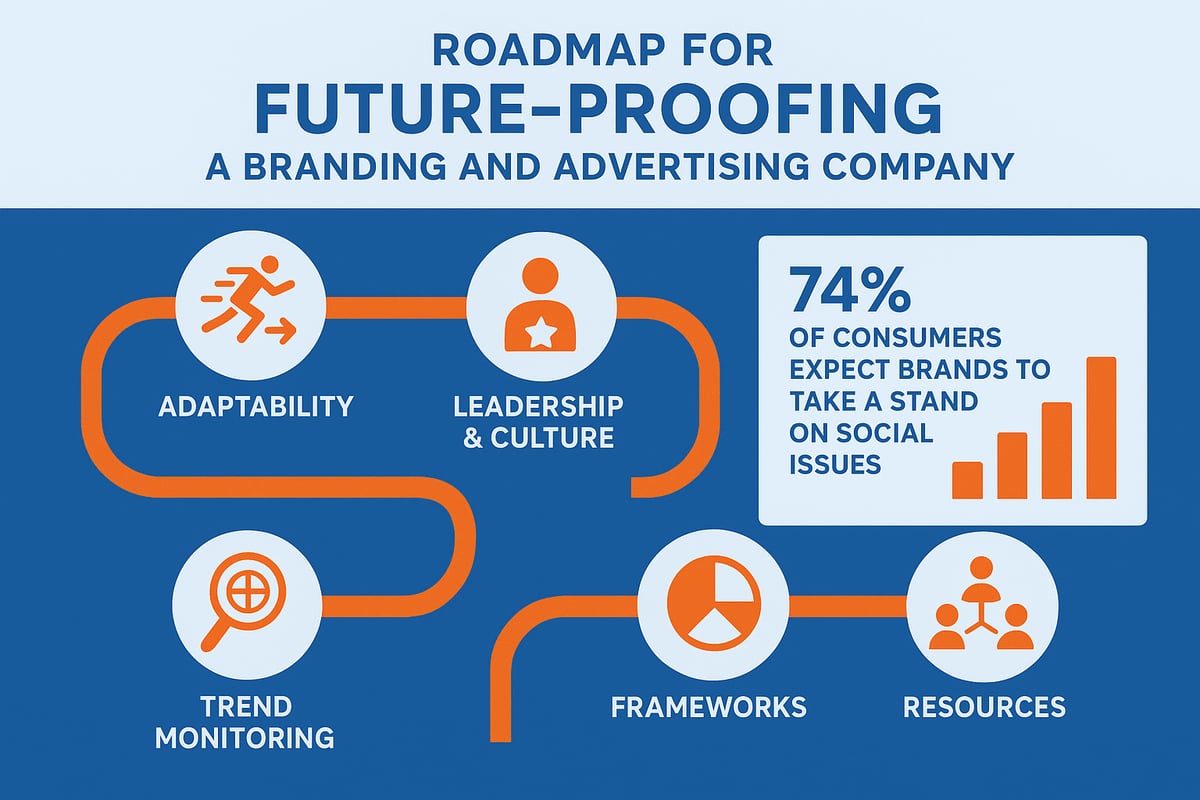
Adaptability is the core trait that separates thriving organizations from those that stagnate. In 2026, consumer needs, technology, and regulations will evolve rapidly. A branding and advertising company must continuously assess its strategies and be willing to update processes to remain relevant.
- Conduct regular market analysis to anticipate shifts.
- Foster a culture that encourages experimentation.
- Prioritize quick feedback loops and iterative improvements.
By embedding adaptability into your operations, your branding and advertising company can respond proactively rather than reactively.
Leadership and Resilient Culture
A successful branding and advertising company relies on leadership that champions change. Leaders must inspire teams to embrace new skills and approaches. Building a resilient company culture means encouraging learning, supporting risk-taking, and celebrating both wins and failures.
- Invest in ongoing training and upskilling.
- Promote transparent communication across all levels.
- Recognize and reward innovative thinking.
When leadership sets the tone for continuous improvement, the entire branding and advertising company becomes more resilient and future-ready.
Strategic Foresight and Trend Monitoring
Staying ahead requires more than just reacting to trends; it demands strategic foresight. Leaders should regularly review industry reports and attend key conferences to spot shifts early. Utilizing resources like the 2026 Advertising Outlook Report provides valuable insight into emerging technologies and evolving consumer expectations.
- Schedule quarterly strategy reviews.
- Benchmark against industry innovators.
- Leverage advanced analytics for real-time insights.
This proactive approach ensures your branding and advertising company is prepared for whatever the future brings.
Action, Resources, and Real-World Examples
To future-proof your branding and advertising company, implement frameworks that support regular evaluation and refinement of strategies. Use tools like SWOT analysis and scenario planning to guide decisions.
Learn from companies that have thrived by investing in digital transformation and championing sustainability. Avoid stagnation by staying connected to professional networks and leveraging services such as Social Media Management Services to keep your brand agile.
Top resources include industry publications, online courses, and peer communities. Encourage your team to adopt a mindset of lifelong learning and take concrete steps now to secure your company’s relevance and growth in the years ahead.
After exploring these nine essential tips, you can see how the right blend of strategy, creativity, and adaptability is crucial to thriving in 2026’s branding and advertising landscape. Whether you are eager to leverage AI, build authentic connections, or embrace data-driven decision making, taking action now can set your business apart in Calgary’s competitive market. If you are ready to stand out, scale up, and grow smarter with strategies tailored to your goals, let’s start the conversation. Reach out to the team at Kreative Angle today to Get Started.