
The marketing world in 2026 is transforming at an unprecedented pace, challenging every business to keep up or risk falling behind. Success now depends on constantly adapting and embracing innovation.
This article is your essential guide to navigating this new era with confidence. We will explore nine different marketing strategies that stand out for their effectiveness and diversity, each designed to help you seize opportunities in a rapidly shifting marketplace.
Discover how these strategies can boost your brand’s relevance, drive results, and position your business for long-term growth. Get ready to learn what it takes to win in 2026.
The Changing Marketing Landscape in 2026
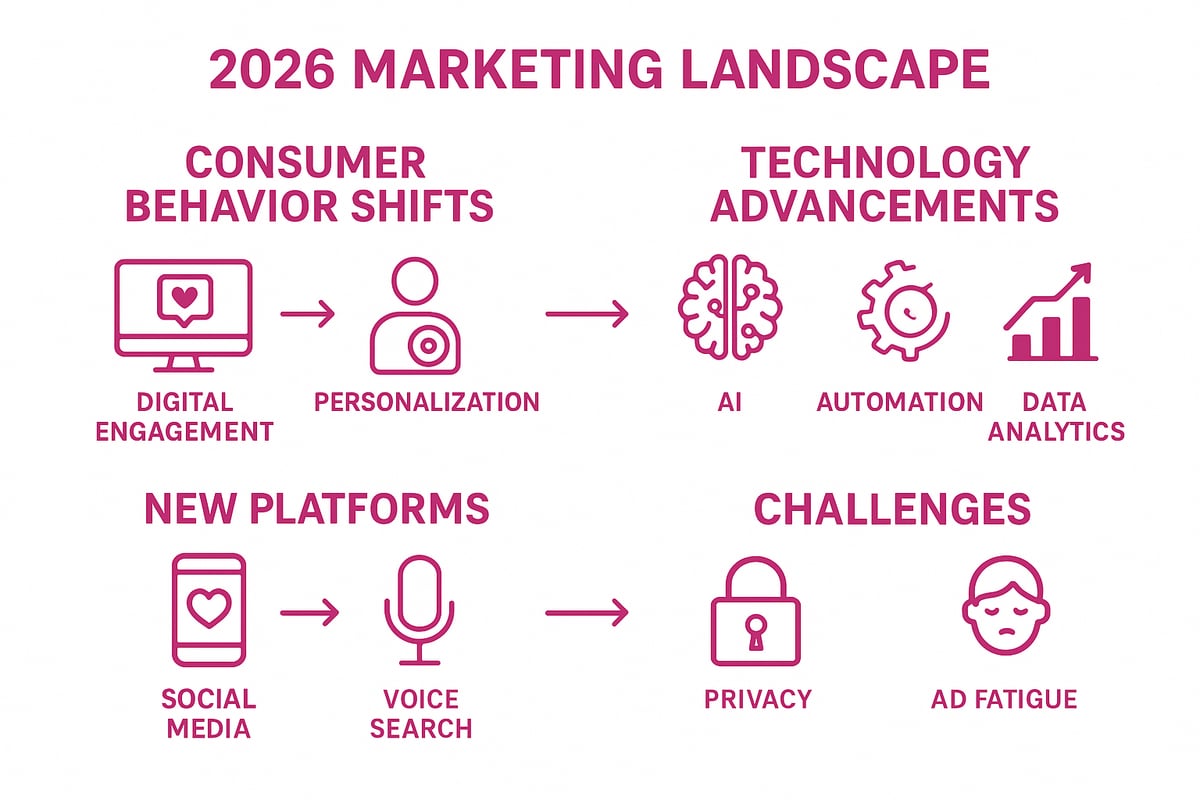
The marketing world in 2026 is evolving faster than ever. Consumers now interact with brands across more digital channels, expecting experiences that are not only seamless but also highly personal. As people spend more time online, brands must rethink how they connect and engage, making different marketing strategies a necessity for those aiming to stay ahead.
Technology Drives Transformation
Artificial intelligence, marketing automation, and advanced data analytics are setting new benchmarks for efficiency and precision. AI tools can analyze vast datasets instantly, enabling marketers to refine different marketing strategies in real time. Automation handles repetitive tasks, freeing up teams to focus on creativity. The arrival of emerging platforms, including innovative social media channels and voice search, is reshaping how brands approach content and SEO.
Trends and Statistics
To illustrate the scale of change, consider the following 2026 trends:
| Metric | 2023 | 2026 (Projected) |
|---|---|---|
| Global digital ad spend | $600B | $860B |
| Mobile device usage | 62% | 78% |
| Video content consumption | +12% YoY | +17% YoY |
| Voice search market share | 20% | 35% |
Consumers are demanding more relevant content, yet they are also increasingly sensitive to privacy. As a result, data privacy regulations are tightening worldwide. Marketers must find a balance between personalization and respecting user data, a challenge that directly influences the success of different marketing strategies.
Navigating Challenges and Adapting
Ad fatigue is another pressing concern. With consumers bombarded by countless messages daily, only campaigns that are authentic and valuable break through. Brands like Nike and Spotify have thrived by embracing agility, quickly pivoting their different marketing strategies and leveraging new technologies to keep audiences engaged. For a comprehensive breakdown on how to adapt, the Essential guide to marketing help offers actionable insights tailored for the 2026 landscape.
Agility and Continuous Learning
Success now hinges on the ability to learn and adapt. Marketers must stay curious, experiment with different marketing strategies, and invest in ongoing education. As the landscape shifts, those who prioritize agility and continuous improvement will lead the way, turning change into opportunity.
9 Essential Different Marketing Strategies for 2026 Success
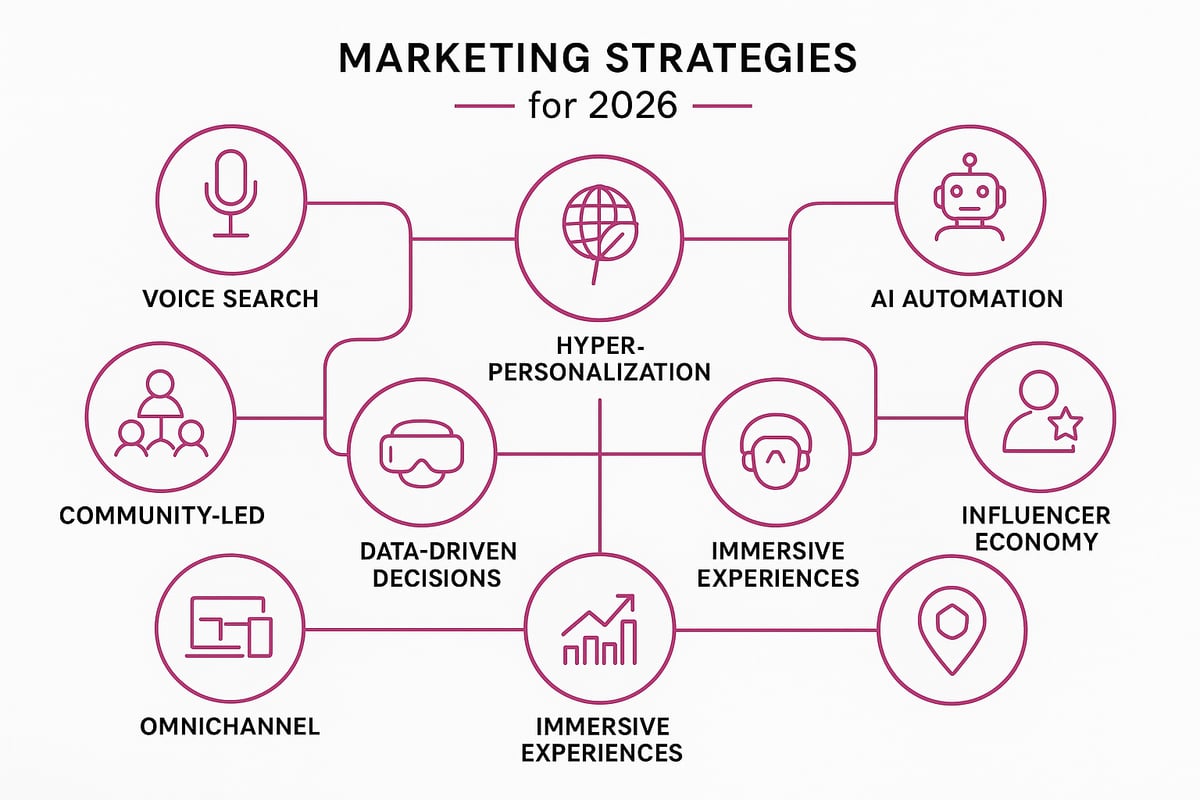
Staying ahead in 2026 means embracing a diverse set of marketing strategies that reflect rapid changes in technology, consumer preferences, and competitive landscapes. Below, we break down nine essential approaches every marketer should consider to unlock growth and resilience.
1. Hyper-Personalized Content Marketing
Hyper-personalization is transforming how brands connect with audiences. Unlike traditional segmentation, this strategy uses advanced data analytics and AI to tailor content for each individual. In 2026, customers expect experiences that reflect their unique preferences, behaviors, and needs.
Brands leverage machine learning to analyze real-time data, dynamically adjusting website content, email campaigns, and product recommendations. For instance, e-commerce platforms now show custom landing pages based on browsing history and purchase patterns.
Personalized email campaigns yield higher open and conversion rates. According to recent studies, personalized emails generate up to six times more revenue than generic blasts. Dynamic product recommendations on retail sites have boosted average order values by 20 percent.
However, hyper-personalization must balance customization with privacy. Brands should be transparent about data usage and offer clear opt-in choices. Ethical considerations are crucial, especially as data privacy regulations tighten globally.
To implement this approach:
- Invest in robust customer data platforms
- Use AI tools for real-time content adjustment
- Segment audiences beyond demographics, considering behaviors and intent
- Regularly review privacy policies and compliance
Hyper-personalized content will remain a core pillar among different marketing strategies, delivering measurable engagement and loyalty.
2. Voice Search Optimization
Voice-enabled devices are reshaping search behavior. By 2026, over 60 percent of online searches are forecasted to originate from voice assistants or smart speakers. This trend is prompting marketers to rethink how they structure content and SEO.
Voice queries differ from text searches. They are longer, more conversational, and often framed as questions. Content must be optimized for natural language and local intent. For example, instead of “best marketing tools,” users might ask, “What are the best marketing tools for small businesses in 2026?”
Key strategies include:
- Integrating long-tail, conversational keywords
- Using structured data to help search engines interpret content context
- Prioritizing FAQ formats and concise answers
- Focusing on local SEO, as many voice searches are location-based
A recent report projects that brands optimizing for voice search see a 30 percent increase in organic traffic. Businesses like Domino’s have successfully integrated voice ordering, enhancing convenience and customer satisfaction.
To learn more about voice search trends and practical steps, visit this comprehensive guide on Voice Search Optimization.
Voice search optimization is quickly becoming a non-negotiable among different marketing strategies for 2026.
3. Sustainable and Purpose-Driven Marketing
Sustainable and purpose-driven marketing is no longer a niche. In 2026, consumers actively seek brands that demonstrate social and environmental responsibility. Over 80 percent of Gen Z and Millennials say they will pay more for sustainable products.
This strategy focuses on transparency, authenticity, and storytelling. Brands must clearly communicate their values and back them up with real actions. For example, Patagonia’s environmental campaigns and TOMS’ donate-a-pair model have inspired deep customer loyalty.
Key pillars of successful purpose-driven marketing include:
- Embedding sustainability in core messaging and operations
- Engaging in honest communication about impact and progress
- Avoiding greenwashing by substantiating all claims with evidence
Data shows that purpose-driven campaigns lead to a 30 percent lift in brand trust. However, missteps can damage a reputation quickly. Marketers must ensure every initiative aligns with company values and customer expectations.
To integrate this approach:
- Audit current practices for sustainability gaps
- Involve stakeholders in goal setting and reporting
- Share progress transparently through multiple channels
Sustainability is now a top priority in different marketing strategies, driving both social impact and business growth.
4. AI-Powered Marketing Automation
AI-powered marketing automation is revolutionizing how brands plan, execute, and measure campaigns. Artificial intelligence streamlines repetitive tasks, freeing teams to focus on strategy and creativity.
Applications include predictive analytics for customer targeting, chatbots for real-time engagement, and automated content creation. AI analyzes massive datasets to predict trends and personalize outreach at scale.
Businesses implementing AI automation report up to 40 percent faster campaign execution and significant cost savings. For example, chatbots handle thousands of customer queries daily, improving satisfaction and reducing workload.
Best practices for success:
- Blend automation with human oversight to preserve brand voice
- Regularly review AI outputs for quality and relevance
- Choose platforms with transparent algorithms and strong support
Concerns about job displacement are valid, but most experts agree that AI augments rather than replaces marketing talent. The focus should be on upskilling teams and fostering collaboration.
For a deeper dive into integrating AI into your workflow, see this resource on AI-Powered Marketing Automation.
Among different marketing strategies, AI-powered automation delivers unmatched efficiency and insight.
5. Influencer and Creator Economy Strategies
The influencer landscape is shifting towards niche creators and micro-influencers. Brands in 2026 prioritize authentic connections over follower counts, focusing on collaboration and co-creation.
Long-term partnerships and content co-development are replacing one-off promotions. This approach builds trust and aligns creators’ audiences with brand values. Data shows that micro-influencers drive 60 percent higher engagement rates compared to mega-influencers.
To succeed, marketers must:
- Vet creators for genuine alignment and audience fit
- Establish clear guidelines and transparency (FTC compliance is critical)
- Explore emerging platforms like TikTok, Twitch, and niche communities
Brands like Gymshark and Daniel Wellington have built global communities through strategic influencer partnerships. Measuring ROI is easier with advanced analytics tools that track conversions and sentiment.
Influencer and creator economy strategies are now essential components of different marketing strategies, offering scalable word-of-mouth and brand advocacy.
6. Interactive and Immersive Experiences
Interactive marketing is gaining momentum as consumers seek engagement, not just information. Formats like quizzes, polls, augmented reality (AR), and virtual reality (VR) are transforming campaigns into memorable experiences.
AR/VR product demos allow customers to visualize products in their environment. For example, IKEA’s AR app lets users place furniture in their homes before buying. Brands using interactive content report 2x higher engagement rates versus static formats.
To integrate immersive experiences:
- Use quizzes and polls to gather customer insights
- Leverage AR/VR for product launches and events
- Measure ROI through engagement metrics and feedback
Accessibility and cost remain challenges, but advances in technology are making these tools more widely available. Marketers should prioritize inclusivity and ease of use.
Interactive and immersive experiences are reshaping different marketing strategies, making brands more relatable and memorable.
7. Data-Driven Decision Making and Predictive Analytics
Data-driven decision making is at the heart of modern marketing. Predictive analytics tools help brands anticipate trends, personalize offers, and optimize campaigns in real time.
Businesses that leverage data to inform strategy report a 25 percent increase in campaign effectiveness. For example, Netflix uses predictive analytics to recommend content, keeping users engaged and reducing churn.
Key steps for building a data-driven culture:
- Invest in analytics platforms for data collection and visualization
- Train teams to interpret and act on insights
- Ensure compliance with data privacy regulations
Ethical data use is paramount. Marketers must be transparent with consumers and adhere to evolving privacy standards.
For further reading on how businesses are driving growth with data, explore this article on Data-Driven Decision Making and Predictive Analytics.
Data-driven strategies are vital within different marketing strategies, enabling precision and agility.
8. Omnichannel Marketing Integration
Omnichannel marketing delivers a seamless customer journey across digital and physical touchpoints. Unlike multichannel approaches, which often operate in silos, omnichannel strategies align messaging, technology, and teams for a unified experience.
Consumers now expect consistent interactions, whether they are online, on mobile, or in-store. Research shows that brands with strong omnichannel integration retain 89 percent of their customers, compared to 33 percent for weaker performers.
Key omnichannel tactics:
- Use customer data platforms to synchronize interactions
- Develop consistent messaging and branding across channels
- Train teams for cross-functional collaboration
Challenges include data integration and accurate attribution. Tools like CRM systems, marketing automation, and unified analytics platforms can help overcome these barriers.
Omnichannel integration sits at the core of different marketing strategies, ensuring brands meet customers wherever they are.
9. Community-Led and User-Generated Content Strategies
Online communities and user-generated content (UGC) are powerful drivers of brand credibility. In 2026, consumers trust peer recommendations and authentic stories over traditional ads.
Brands like LEGO and GoPro have built thriving communities, encouraging users to share content and ideas. UGC influences 79 percent of purchasing decisions, making it a strategic priority.
Best practices for this approach:
- Foster engagement with incentives and recognition programs
- Curate and showcase authentic user content across channels
- Implement moderation to protect brand safety and intellectual property
Platforms like Reddit, Discord, and branded forums offer new opportunities for community-led growth. The long-term value lies in sustained loyalty and organic brand advocacy.
Community-led and UGC strategies are indispensable pillars of different marketing strategies, amplifying reach and trust.
Building a Future-Proof Marketing Strategy
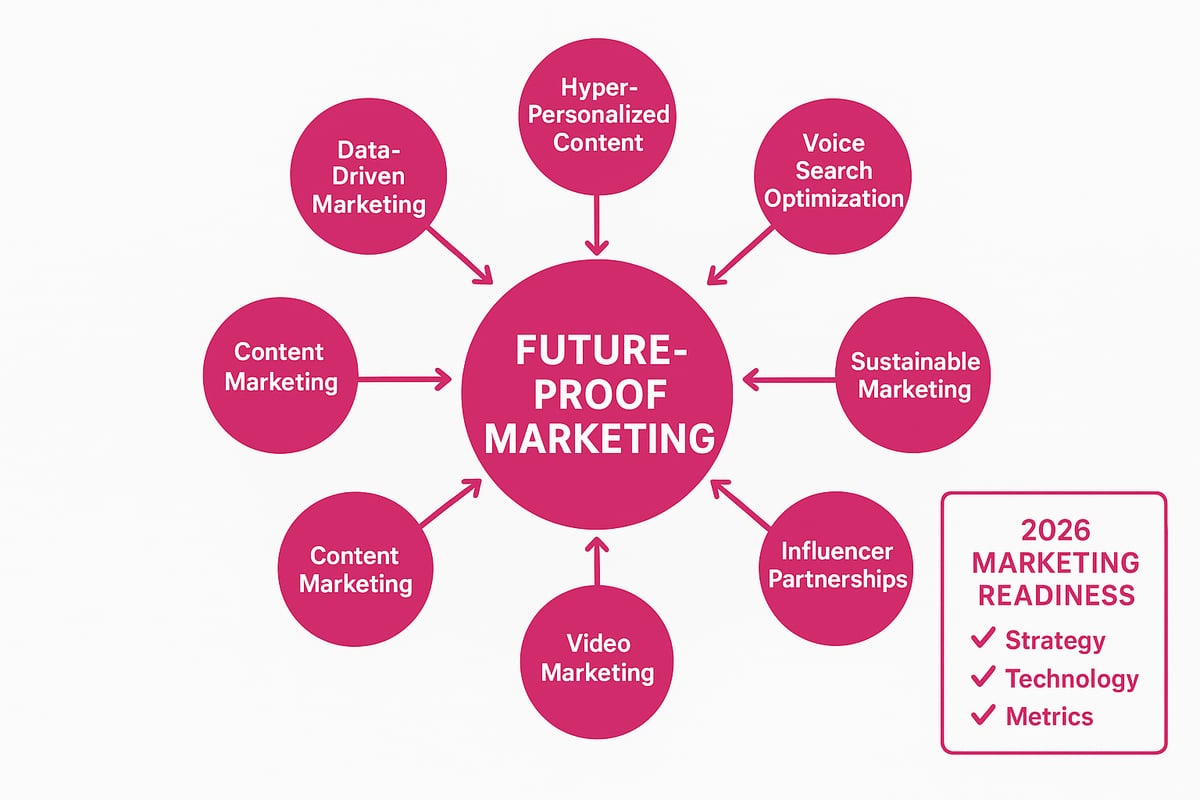
Future-proofing your approach is essential as the marketing ecosystem transforms at record speed. Brands that thrive in 2026 are those that not only adopt different marketing strategies but also weave them into a cohesive, agile framework. These strategies are not isolated tactics. When combined, they create a powerful engine for growth, resilience, and innovation.
Synthesizing the Power of Different Marketing Strategies
Success in 2026 relies on blending different marketing strategies into a unified vision. Hyper-personalization, AI-driven automation, and immersive experiences work best when aligned with data-driven insights and omnichannel integration. For example, a brand might use predictive analytics to identify trends, then deploy tailored content across both digital and physical touchpoints.
Cross-functional teams are critical. When marketers, data analysts, product designers, and customer service work together, they can rapidly adapt to changes. This synergy allows businesses to deliver consistent, relevant, and engaging experiences that meet rising consumer expectations.
Roadmap: How to Future-Proof Your Marketing
To ensure your business is ready for the next wave of change, follow this actionable roadmap:
- Audit Your Current Strategy: Evaluate how well your different marketing strategies are integrated.
- Prioritize Innovation: Identify gaps and emerging trends that align with your brand.
- Foster Collaboration: Break down silos between departments for smoother execution.
- Leverage Data and Technology: Invest in analytics, automation, and personalization tools.
- Experiment and Measure: Pilot new tactics, track results, and refine based on data.
- Embrace Purpose and Community: Build trust through transparency and authentic engagement.
For more inspiration and actionable steps, explore Ideas for a marketing campaign, which offers practical examples to spark your next move.
Real-World Example: Future-Proofing in Action
Consider a retail brand that combined omnichannel marketing, voice search optimization, and sustainable messaging to drive growth in 2026. By uniting their different marketing strategies, they achieved a seamless customer journey, reduced ad fatigue, and increased loyalty—all while adapting to the latest privacy standards.
2026 Marketing Readiness Checklist
| Readiness Factor | Status (Yes/No) |
|---|---|
| Integrated different marketing strategies | |
| Data-driven decision making | |
| Omnichannel customer experience | |
| AI and automation adoption | |
| Personalization at scale | |
| Sustainable, purpose-driven messaging | |
| Cross-functional collaboration | |
| Ongoing experimentation | |
| Community engagement and UGC |
Use this checklist to evaluate your organization’s progress. Regular reviews help ensure your strategy remains relevant and resilient.
Continuous Learning: The Marketer’s Edge
The journey does not end once you implement these different marketing strategies. Marketers must stay informed about new tools, platforms, and trends. Ongoing education, networking, and cross-industry learning are vital for maintaining a competitive edge. By embracing agility and nurturing a culture of experimentation, your business can confidently navigate the evolving marketing landscape of 2026 and beyond.
After exploring these nine forward-thinking marketing strategies, you can see just how much opportunity lies ahead for businesses ready to adapt and thrive in 2026. Whether you want to personalize your outreach, harness AI, or build a truly omnichannel experience, the future rewards those who plan and innovate today. If you’re ready to make your brand impossible to ignore and grow smarter with a strategy tailored for tomorrow’s challenges, let’s take the first step together.
Get Started
Your future in marketing success begins now.